Residential Service
Oil Stain Removal Services in Ohio
Degrease and lift dark oil spots from driveways and garage floors.
Oil Stain Removal in Ohio
Oil spots make even a clean driveway look neglected. We pre-treat oil and grease with commercial degreasers, then surface-clean to pull the staining out of the concrete — leaving an even, bright finish instead of dark blotches.
The Problem
Motor oil and grease soak into porous concrete and leave dark stains that ordinary washing cannot remove.
Our Surface-Safe Approach
Commercial degreasers worked into the stain, followed by hot-capable surface cleaning to lift the oil from the pores.
The Result
A cleaner, more even driveway or garage floor, with the dark spots dramatically reduced or gone.
Why choose Redhead for oil stain removal
- Commercial degreasing for set-in oil
- Even surface-cleaner finish, not blotchy
- Works on driveways and garage floors
- Pairs with sealing to resist future stains
- Residential and commercial
Oil Stain Removal in Ohio
Your complete guide to oil stain removal in Ohio
Why Oil Sinks Into Concrete and Refuses to Leave
Concrete looks solid, but it isn't. A poured slab is riddled with microscopic pores and hairline channels, and it behaves like a hard sponge. When motor oil, transmission fluid, hydraulic fluid, or a greasy food spill lands on it, the liquid wicks down into those pores instead of sitting on top. That's why a stain you wiped up months ago still shows as a dark shadow. The surface is clean, but the oil that soaked in is still there.
Petroleum-based oils are hydrophobic, which is a fancy way of saying they hate water. You cannot rinse them away, and a garden hose only pushes them deeper. Heat makes it worse. On a hot Ohio afternoon, an asphalt or concrete surface can reach well over 120 degrees, and warm oil flows faster and travels farther into the slab. Give a fresh spill a few sunny days and it stops being a surface problem and becomes an embedded one.
Removing an embedded oil stain is a chemistry job, not a muscle job. It takes a degreasing cleaning solution that breaks the bond between the oil and the concrete, dwell time for that solution to work down into the pores, and controlled hot-water extraction to lift the loosened oil back up and off the surface. Blasting cold water at high pressure does none of that. It just etches the concrete and leaves the stain behind. This same pore-penetration problem is at the heart of most concrete cleaning work, which is why oil demands a different approach than surface dirt.
How Ohio's Climate Makes Oil Stains Worse and Harder to Remove
The I-75 corridor between Dayton and Cincinnati puts concrete through a brutal cycle. Winters bring freeze-thaw. Water and dissolved oil work into the pores, freeze, expand, and pry the pore structure open a little wider each cold snap. Every spring, those slightly larger pores hold oil more stubbornly than they did the year before. An old stain that has ridden through a few Ohio winters is genuinely harder to pull than a fresh one.
Road salt and de-icer add to the mess. Salt-laden slush drips off vehicles all winter, and by March you often have oil and salt residue layered together on a driveway or garage apron. Humidity is the other factor. Southwest Ohio summers are humid, and shaded, damp concrete grows organic staining right alongside the oil. Black or green streaks near an oil spot are usually algae and the Gloeocapsa magma bacteria that cause the black roof stains people know. Pollen in spring and dust from nearby roads cling to the oily film because grease is sticky, so a single leak often becomes a wide, dark, spreading blotch.
All of this means an Ohio oil stain is rarely just oil. It's oil bound up with salt, algae, pollen, and traffic grime, sitting in a pore structure that freeze-thaw has opened up. Treating it well means matching the cleaning solution to that whole mix, not just the petroleum. That's the practical difference between a professional treatment and a bottle of degreaser from the hardware store.
How We Actually Remove Embedded Oil, Step by Step
Every stain gets read before it gets treated. Fresh oil, old baked-in oil, and a stain that's already been scrubbed with the wrong product all behave differently, so the first thing we do is identify what we're dealing with and how deep it has gone. From there the work follows a clear sequence.
- Pre-treatment. We apply a surface-safe degreasing cleaning solution directly to the stain and let it dwell. Dwell time is where the real work happens. The solution needs minutes, not seconds, to penetrate the pores and break the oil's grip on the concrete.
- Agitation. For heavier stains we work the solution in so it reaches the oil that has migrated below the surface, rather than just the film you can see.
- Hot-water extraction. Heat is the piece most DIY attempts are missing. Hot water dramatically improves how oil releases, and controlled equipment lifts the emulsified oil up and off instead of driving it deeper.
- Second pass if needed. Deep or aged stains often need a repeat cycle. Older concrete usually won't return to bright white, and we tell you that up front rather than overpromising a like-new result that isn't physically possible.
- Rinse and neutralize. We flush the area so no residue is left to attract fresh dirt, and we make sure runoff is handled responsibly.
Pressure is matched to the surface, never maxed out for its own sake. On sound concrete we can use more force; on pavers, decorative finishes, or older slabs we ease off and let the cleaning solution do the heavy lifting. The same surface-safe philosophy carries across our driveway cleaning work, where the goal is a clean surface that isn't chewed up in the process.
Different Surfaces, Different Methods
Oil doesn't care what it lands on, but the removal method has to. The surface dictates how aggressive we can be and which cleaning solution is safe.
- Broom-finished concrete. The most common driveway and garage-floor surface, and the most forgiving. The rough texture holds oil, but sound concrete tolerates hot water and firm technique well.
- Smooth or troweled concrete. Shows stains vividly and can be slick, so it needs a careful touch to avoid leaving swirl marks or an uneven finish.
- Pavers and stamped concrete. Sealed or decorative surfaces can be damaged by harsh product or high pressure. These get lower pressure and gentler solutions, plus attention to the joints where oil collects.
- Asphalt. A petroleum product itself, so strong solvents can soften it and high heat or pressure can gouge it. Asphalt gets the most conservative approach of all.
- Garage floors and shop aprons. Usually the worst offenders, with layered oil, tire marks, and dropped fluids built up over years. These often need multiple passes.
Large commercial and multi-vehicle surfaces bring their own scale and traffic-film challenges, which is why parking lot cleaning uses heavier equipment and a plan for keeping the lot usable during the work. Matching method to material is the whole game, and it's the step most rushed jobs skip.
Signs Your Concrete Needs Professional Oil Stain Removal
Some stains are obvious. Others creep up slowly until the whole surface looks tired. Here's when it's worth calling instead of scrubbing.
- A dark shadow that won't rinse off. If you've hosed or scrubbed and the mark is still there, the oil is embedded in the pores and needs a degreasing treatment with real dwell time.
- A spreading or fanning stain. Oil migrates. A small drip under a parked car becomes a widening blotch as grease pulls in pollen, dust, and grime.
- Black or green streaks around the oil. That's organic growth feeding on the oily film, common on shaded Ohio concrete, and it needs to be treated alongside the petroleum.
- A slick or glossy patch. An oily surface is a slip hazard, especially at a garage entrance or a walkway where people step from pavement to concrete.
- Old stains before you seal. Sealer traps whatever is under it. Cleaning oil out first is the difference between a sealed surface that looks good and one that locks a stain in permanently.
- Curb appeal before a sale or event. A clean, even driveway reads as a well-kept home. A blotchy one is the first thing a buyer's eye lands on.
How Often to Clean and the Best Time of Year in Ohio
There's no fixed schedule that fits every property, because it depends on how much your surface takes on. A driveway where a vehicle leaks, a garage floor, or any concrete near where you park and work needs attention more often than a clean walkway. As a practical rule, plan on a thorough cleaning once a year for a typical residential driveway, and address any active oil leak as soon as you spot it. The longer oil sits, the deeper it sets and the harder it is to fully lift.
Timing matters in southwest Ohio. Spring is the strongest window. It clears the winter's accumulation of road salt, oil, pollen, and any algae that took hold in the damp, and it gets the surface clean before summer heat bakes fresh spills in deeper. Fall is the second-best time, since going into winter with a clean, oil-free surface means fewer contaminants sitting in the pores when the freeze-thaw cycle starts prying them open. We work through the warmer months across the region, from Springboro up through the Dayton suburbs and down toward Cincinnati.
One more piece of timing: seal after you clean, not before. If you're planning to seal a driveway or garage floor, remove the oil first. Sealing over an oil stain locks it in for the life of the coating.
Why DIY Oil Removal Often Backfires
The internet is full of oil-stain hacks. Cat litter, baking soda, dish soap, vinegar, WD-40, a rented pressure washer. Some help a little on a fresh spill. Most do real harm on an old one, and a few damage the concrete itself.
- Cat litter and baking soda only absorb what's on the surface. They can soak up a wet spill before it sinks in, but they do nothing for oil that has already penetrated the pores. Scrubbing dry powder into concrete can also grind grime deeper.
- WD-40 and solvents can spread the stain. A petroleum solvent re-liquefies the oil, and without a way to extract it, you often just move it around and enlarge the mark.
- Cold high-pressure blasting etches concrete. A rented machine held too close, or run at too high a setting, carves lines and pits into the surface. That damage is permanent, and it leaves the oil behind because cold water can't break the oil-to-concrete bond.
- Harsh acids and bleach damage the surface and the surroundings. Muriatic acid eats the concrete's surface paste and can leave it rougher and more stain-prone than before. Runoff can kill grass and harm storm drains.
- Wrong product on the wrong surface. A degreaser strong enough for a shop floor can discolor pavers, soften asphalt, or strip a decorative finish.
The common thread is that DIY methods treat the surface while the real problem is below it, and they use force where the job actually needs the right cleaning solution, dwell time, and heat. That's the same reason cold-water blasting fails on general grime too, and why our whole approach to concrete cleaning leans on chemistry and technique over raw pressure.
Why Hiring a Licensed and Insured Local Pro Pays Off
Oil stain removal has more downside than most cleaning jobs. Get it wrong and you can etch the slab, spread the stain, poison the lawn, or lock the problem in under a coat of sealer. Getting it right means knowing which cleaning solution matches the surface, how long to let it dwell, how much heat and pressure the material can take, and how to handle runoff responsibly. That's experience you don't want to buy through trial and error on your own driveway.
We're a local, owner-operated, licensed and insured pressure-washing company based in Springboro, and we treat your property as our own. That matters with a task that touches your concrete, your landscaping, and your storm drains. It also means clear, honest expectations. Some deep or aged stains lighten dramatically but won't disappear completely, and we'll tell you that before we start rather than leaving you disappointed after. We serve the I-75 corridor and beyond, from Dayton to Cincinnati and across Ohio.
If an oil stain is dragging down the look of your driveway, garage, or walkway, we're glad to take a look and give you a straight answer on what's possible. Free written estimates, no pressure, no guesswork. Call or text us at (351) 242-0666 to set up your estimate.
Real Jobs
Oil Stain Removal — Recent Work
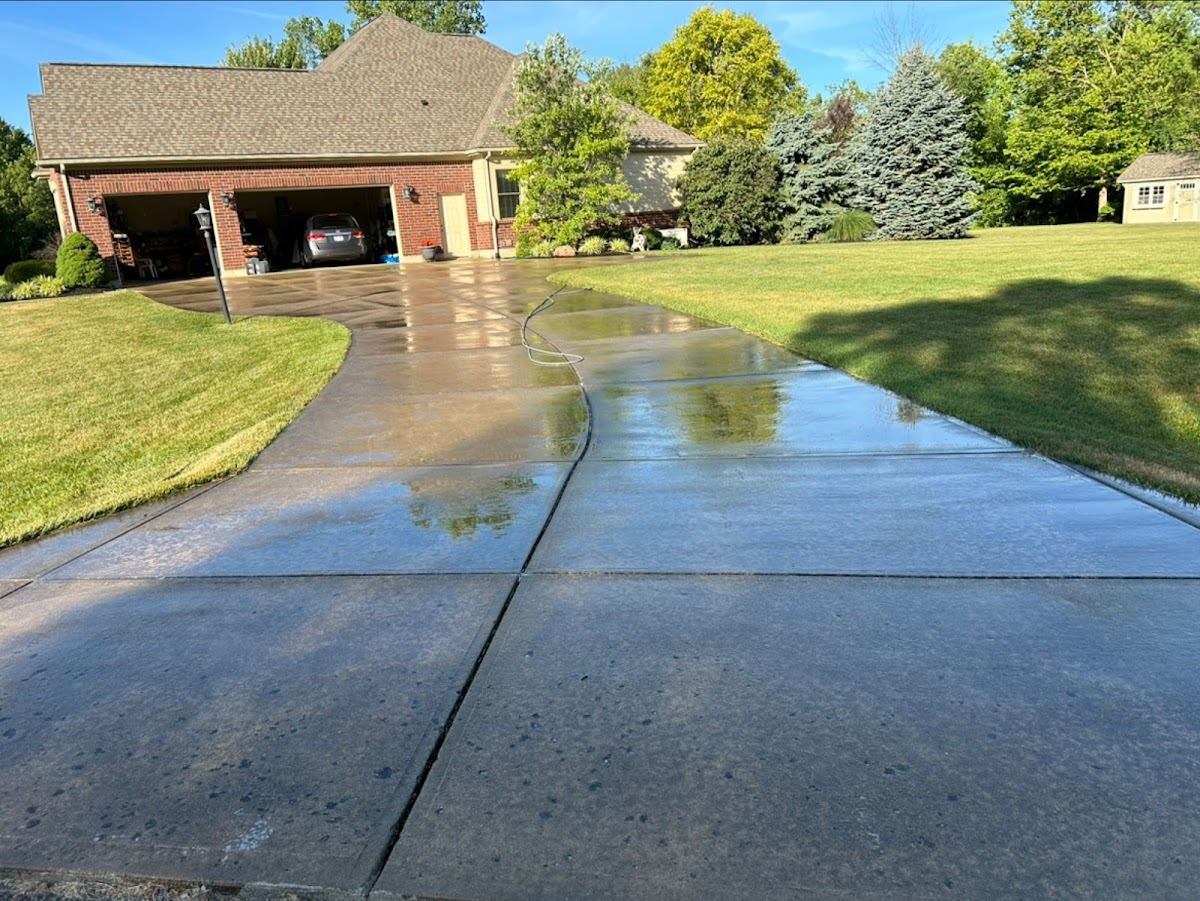
Real photos from Redhead Pressure Cleaning jobs across Ohio.
How It Works
Our Oil Stain Removal Process
- 1
Request a Free Estimate
Call or text us a quick description (a photo helps) and we send back a clear, no-obligation quote.
- 2
We Inspect the Surface
We look at the material, the buildup, and the surroundings to choose the safest, most effective method.
- 3
We Choose the Right Method
High pressure for hard surfaces, low-pressure soft washing for siding, roofs, and delicate materials.
- 4
We Wash Safely & Thoroughly
We protect landscaping, apply surface-safe cleaning solutions, and clean every section with care.
- 5
Final Walkthrough
We walk the finished work with you to make sure you're happy before we pack up.
Related Services
Questions
Oil Stain Removal FAQs
Fresh stains usually clean up very well. Old stains that have soaked deep into the pores and ridden through a few Ohio winters can be lightened dramatically, but they may not vanish completely. The oil has bonded with the concrete below the surface. We'll assess your specific stain and tell you honestly what result to expect before we start.
No. Pressure alone, especially with cold water, doesn't break the bond between oil and concrete. It mostly pushes the oil deeper and can etch the surface. Removing embedded oil takes a degreasing cleaning solution, dwell time, and hot-water extraction working together. Pressure is just one part of the process, and it's always matched to the surface.
They can help on a fresh spill you catch quickly. On an old, embedded stain they usually don't work and can make it worse. WD-40 re-liquefies the oil and often spreads it, and dry powders only absorb what's on the surface. Once oil has penetrated the pores, it needs professional degreasing and extraction, not a household hack.
Yes, always clean first. Sealer traps whatever is underneath it, so sealing over an oil stain locks it in for the life of the coating. Remove the oil, let the surface dry, and then seal. Doing it in that order is the difference between a clean sealed surface and a permanently trapped stain.
Freeze-thaw is the reason. Water and dissolved oil work into the concrete's pores, freeze, and expand, prying the pore structure a little wider each cold snap. That lets oil settle deeper and hold tighter. Add road salt and winter grime, and a stain that was minor in the fall can look much worse by spring.
Yes, when the method is matched to the surface. Decorative and sealed surfaces can't take the same pressure or harsh product as a plain slab, so we use lower pressure and gentler, surface-safe cleaning solutions and pay attention to the joints where oil collects. Using the wrong product on these surfaces is exactly how DIY attempts cause discoloration and damage.
Spring is the strongest window. It clears the winter buildup of salt, oil, pollen, and algae, and it beats the summer heat that bakes fresh spills in deeper. Fall is a close second, since going into winter with clean, oil-free concrete means fewer contaminants in the pores when freeze-thaw starts. We work throughout the warmer months across the Dayton-to-Cincinnati corridor.
Yes. Those streaks are usually algae and organic growth, including the Gloeocapsa magma bacteria behind common black staining, feeding on the oily film on shaded, damp concrete. We treat that organic growth alongside the petroleum stain so the whole area comes clean rather than just the oil spot itself.
Request a Free Estimate
Tell us about your oil stain removal job — a photo helps us quote fast.

Ready for Professional Oil Stain Removal?
Get a free, no-obligation estimate for oil stain removal anywhere in Springboro, the I-75 corridor, and across Ohio.