Residential Service
Rust Stain Removal Services in Ohio
Specialized treatment that lifts orange rust and fertilizer stains.
Rust Stain Removal in Ohio
Those orange stains on your concrete and siding won't budge with ordinary washing — they are rust, often from fertilizer, irrigation water, or metal furniture. We use specialized rust treatments that dissolve the staining and rinse it away, restoring the original surface.
The Problem
Rust and fertilizer stains bond to concrete and siding and resist normal pressure washing.
Our Surface-Safe Approach
Targeted rust-removal treatments applied before surface cleaning to break down and lift the staining.
The Result
Concrete and siding returned to their original color, free of orange staining.
Why choose Redhead for rust stain removal
- Removes stains ordinary washing leaves behind
- Specialized, surface-safe rust treatments
- Works on concrete, brick, and siding
- Tackles fertilizer and irrigation rust
- Often paired with sealing to prevent recurrence
Rust Stain Removal in Ohio
Your complete guide to rust stain removal in Ohio
Why Rust Stains Show Up on Ohio Concrete and Brick
Rust is iron oxide. It forms when a source of iron meets water and oxygen, then leaches into the pores of a surface and sets. On concrete, brick, and stone, that stain doesn't sit on top the way dirt does. It bonds to the minerals in the surface, which is why a garden hose and a stiff brush rarely touch it.
In our part of Ohio, a handful of sources cause most of the rust we see along the I-75 corridor from Dayton to Cincinnati:
- Iron-rich fertilizer. Most lawn fertilizers contain iron to green up the grass. When granules scatter onto a driveway or sidewalk and then get hit by a sprinkler or a summer rain, the iron dissolves and blooms into orange spots and streaks within a day.
- Irrigation and well water. A lot of homes on the outskirts of Springboro and Franklin Township run on well water, which carries dissolved iron. Iron concentrations as low as 0.3 ppm are enough to start staining. A sprinkler head that hits the same slab every morning will paint an orange arc over a season.
- Metal in contact with the surface. Patio furniture feet, potted-plant stands, bikes, grills, rebar too close to the surface, and dropped fasteners all rust in place and bleed into the concrete.
- Road salt and freeze-thaw. Ohio winters put salt and brine on our drives and walks. Salt is corrosive, accelerates the rusting of any embedded metal, and the freeze-thaw cycle opens up the surface pores so iron soaks in deeper.
Because our climate swings from humid summers to freezing winters, surfaces here stay damp longer and take on stains that a drier climate might shrug off. Rust rarely comes alone, either. It usually rides in with organic staining like the black-green Gloeocapsa magma algae, pollen, and general grime, so a proper treatment has to address more than just the orange.
How Professional Rust Removal Actually Works
Rust removal is a chemistry job, not a pressure job. You cannot blast iron oxide out of concrete with water. Crank the pressure high enough to make a dent and you'll etch the surface, leave wand marks, and strip the cream layer off the concrete long before the stain lets go. The rust wins that fight every time.
The right approach is a targeted rust remover matched to the surface, worked into the stain, given proper dwell time, then rinsed and neutralized. Here's what that looks like in practice:
- Identify the source first. We look at where the stain sits and what shape it takes. A fan-shaped bloom points to a sprinkler. Scattered dots point to fertilizer. A rectangle points to furniture feet. If the source is still active, we flag it so the stain doesn't just come back next month.
- Match the remover to the surface. An oxalic-acid-based rust remover handles most fertilizer and irrigation staining on concrete without eating the surface. Deeper, older stains sometimes need a stronger, controlled application. Brick, natural stone, pavers, and colored or stamped concrete each react differently, so the product and the strength get adjusted to the material.
- Dwell, agitate, and rinse. The remover needs time to convert the iron oxide into something water-soluble. We let it work, agitate where needed, then rinse thoroughly at a pressure the surface can take. A surface-safe rinse pulls the dissolved iron away instead of driving it deeper.
- Rinse the surrounding area. Rust removers can affect nearby metal, glass, plants, and finishes if left unchecked. We pre-wet landscaping and protect what needs protecting, then flush the area so nothing is left to react.
Rust work often pairs with a full concrete cleaning so the treated area matches the rest of the slab instead of leaving a clean patch on a dirty driveway. On larger paved areas we'll fold it into a complete driveway cleaning for an even result edge to edge.
Which Surfaces We Treat and Why Method Matters
No two surfaces take rust the same way, and no two take treatment the same way either. Reading the material correctly is what separates a clean result from a bleached spot or a halo.
- Broom-finished concrete. The most common surface we treat, and the most forgiving. Porous enough that rust sets in, durable enough to handle a proper remover. This is bread-and-butter rust work.
- Stamped, colored, and sealed concrete. The color and sealer change everything. The wrong acid can dull the pigment or cloud the sealer. These get a milder, tested approach and careful neutralizing.
- Brick and mortar. Brick is porous and the mortar joints are lime-based, so an overly aggressive acid can burn the joints. Strength and dwell time get dialed back.
- Pavers. Rust can wick under the surface. We treat the stain and rinse so we don't lift the polymeric sand in the joints.
- Natural stone. Limestone and travertine are acid-sensitive and can etch. These demand the gentlest products and a light hand, or a different chemistry entirely.
Rust also travels with company. Petroleum staining under a rusty spot is a separate problem that calls for oil stain removal, and organic growth needs a surface-safe soft-wash rather than acid. We read the whole surface and treat each problem with the method it needs.
Signs You Need Rust Stain Removal
Rust doesn't fix itself, and it gets harder to remove the longer it sits and the more freeze-thaw cycles it goes through. If you see any of these, it's time to treat it:
- Orange or brown blooms near a sprinkler head or along the arc where irrigation hits the concrete.
- Scattered orange dots after fertilizing the lawn, usually along the edge of the driveway or walk.
- A rectangle or set of feet-shaped marks where metal furniture, a grill, or a planter has been sitting.
- Rusty streaks running down a wall or foundation from a metal fixture, railing, or downspout strap above.
- Orange bleeding up through the surface, which can mean rebar or wire mesh corroding inside the slab. This one is worth watching, because it points to a problem below the surface.
- Stains that got worse or bigger after you tried a store-bought cleaner or vinegar.
Fresh rust is far easier to remove than rust that's been baking into the surface for a year. If you've just noticed spots, that's the moment to deal with them, not after another winter of salt and freeze-thaw drives the iron deeper.
How Often Rust Removal Is Needed and When to Schedule It
Unlike routine washing, rust removal isn't on a fixed calendar. It's driven by the source. Stop the source and one treatment can hold for a long time. Leave the source running and the stain comes back no matter how well it's removed.
A few practical guidelines for Ohio homeowners:
- Fertilizer season. Spring and fall are the big fertilizing windows here. If you spot spatter on the concrete after an application, sweep the granules off the slab right away and plan to treat any staining before it sets.
- After irrigation adjustments. If a sprinkler head has been arcing onto a slab all summer, get it redirected and treat the stain in late summer or early fall, before winter locks it in.
- Before winter. Late fall is a smart time to clear rust and give the surface a clean start ahead of salt and freeze-thaw season. It also pairs well with a full surface wash while the weather still allows a proper rinse.
- Spring cleanup. After a hard Ohio winter, spring is when road-salt corrosion and last year's stains show up worst. A spring treatment resets the curb appeal.
Temperature matters for the work itself. Rust removers need liquid water and above-freezing conditions to do their job and rinse clean, so the treatable season runs roughly from spring thaw through late fall. We're happy to look at the surface any time and tell you honestly whether it's worth treating now or worth waiting for better conditions.
Why DIY Rust Removal Usually Makes It Worse
There's no shortage of internet advice on rust: lemon juice and salt, white vinegar, cola, muriatic acid from the hardware store. Some of it does a little. Most of it either fails on real stains or damages the surface trying. Here's where DIY goes wrong:
- Muriatic (hydrochloric) acid is too aggressive. It's often the first thing people reach for, and it etches concrete, dulls the finish, burns mortar joints, and can leave the treated spot lighter than the rest of the slab. It also doesn't dissolve iron as cleanly as the right acid, so you get damage without fully getting the stain.
- Mild acids barely scratch set-in rust. Vinegar and lemon juice can lift a fresh, shallow spot, but on a stain that's had months to set they just spread the iron around and leave a faint halo.
- Pressure washing drives it deeper and marks the surface. Turning up the pressure to force the stain out etches lines into the concrete and pushes dissolved iron further into the pores. Now you have wand marks and rust.
- Wrong product on the wrong surface. Acid on limestone, on colored concrete, or on delicate mortar can cause permanent etching or discoloration that costs far more to address than the original stain.
- Ignoring the source. Even a perfect DIY removal is temporary if the sprinkler still hits the slab or the fertilizer keeps landing on the concrete. The stain returns and the cycle repeats.
Rust removers are also strong enough to injure landscaping, corrode metal, and irritate skin and lungs if handled carelessly. A pro brings the right chemistry, the right dilution, plant protection, and proper rinsing and neutralizing so the stain leaves and the surface, your plants, and everything around it stay intact.
What Affects the Result and How Long It Lasts
A clean result depends on more than the product in the sprayer. When we look at a rust job, these are the factors that decide how completely the stain comes out and how long it stays gone:
- Age of the stain. Fresh rust releases far more easily than rust that's cured into the surface over months of sun, rain, and freeze-thaw.
- Depth of penetration. Surface staining lifts cleanly. Iron that has wicked deep through porous concrete or brick may lighten dramatically but leave a faint shadow. We'll tell you upfront which one you're likely dealing with.
- Surface porosity and finish. A tight, sealed surface holds the stain near the top where it's easier to reach. A rough, weathered, or unsealed surface drinks the iron in deeper.
- Whether the source is fixed. This is the single biggest factor in longevity. Redirect the sprinkler, move the metal furniture, sweep fertilizer off the slab, and the result holds. Leave the source and it comes back.
- Sealing after treatment. A clean, sealed surface resists new staining and is much easier to keep clean going forward.
We're straight with you about outcomes before we start. Most fertilizer and irrigation staining comes out to where you'd never know it was there. Deep, old, or rebar-driven staining sometimes lightens rather than vanishes, and we'll say so rather than overpromise. Free written estimates mean the plan and expectations are in writing before any work begins.
Get Your Rust Stains Handled by a Licensed and Insured Local Pro
Rust is one of the most misunderstood stains out there, and one of the easiest to make worse with the wrong product or too much pressure. As a local, owner-operated, licensed and insured company, we treat every property as if it were our own, match the method to your surface, and address the source so the stain doesn't just come back. We serve homeowners throughout Springboro, Dayton, and the surrounding I-75 corridor, plus communities across Ohio.
If you've got orange spots on a driveway, walk, patio, or brick, we'll take a look, tell you honestly what can come out, and give you a free written estimate with no pressure. Call or text (351) 242-0666 to schedule your rust stain removal today.
Real Jobs
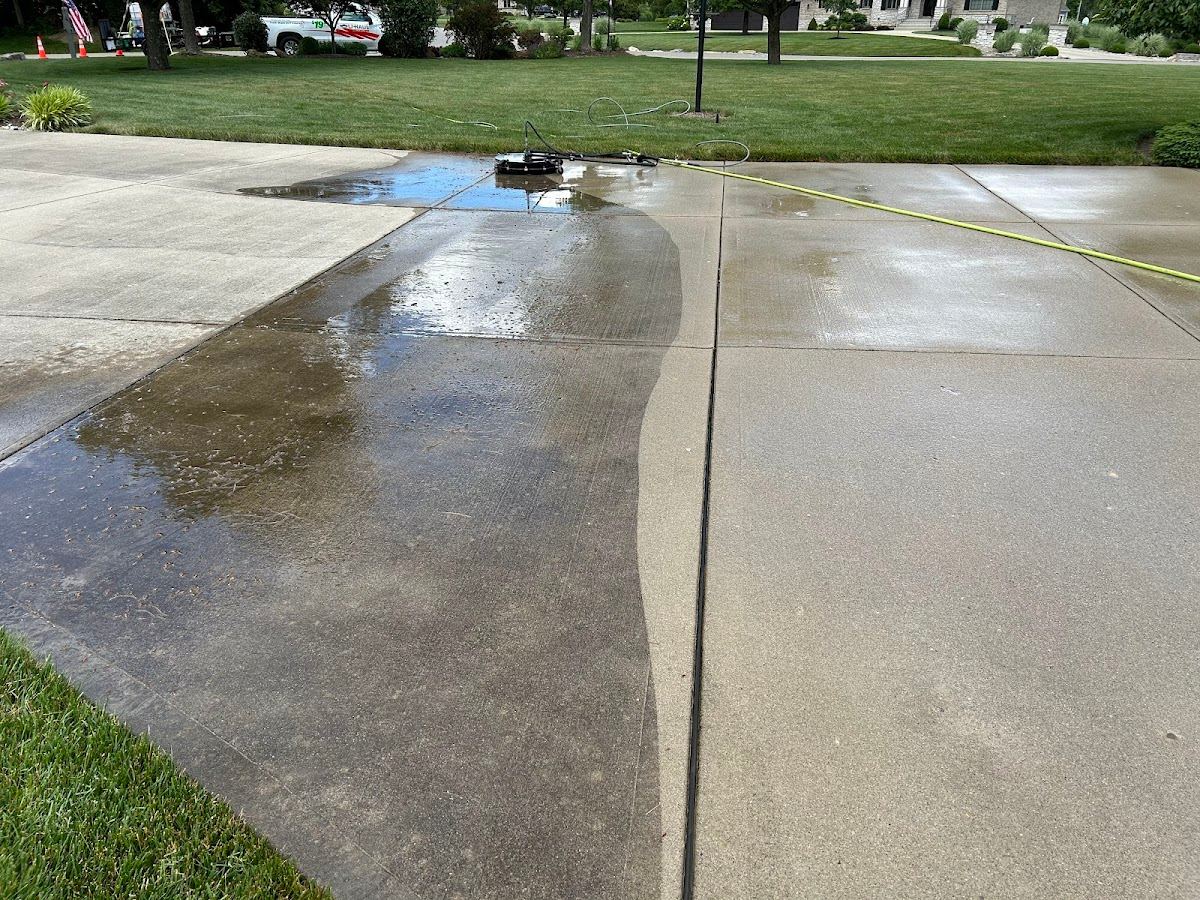
Rust Stain Removal — Recent Work
Real photos from Redhead Pressure Cleaning jobs across Ohio.
How It Works
Our Rust Stain Removal Process
- 1
Request a Free Estimate
Call or text us a quick description (a photo helps) and we send back a clear, no-obligation quote.
- 2
We Inspect the Surface
We look at the material, the buildup, and the surroundings to choose the safest, most effective method.
- 3
We Choose the Right Method
High pressure for hard surfaces, low-pressure soft washing for siding, roofs, and delicate materials.
- 4
We Wash Safely & Thoroughly
We protect landscaping, apply surface-safe cleaning solutions, and clean every section with care.
- 5
Final Walkthrough
We walk the finished work with you to make sure you're happy before we pack up.
Related Services
Questions
Rust Stain Removal FAQs
Most fertilizer and irrigation rust comes out completely with the right remover and dwell time, especially when it's fresh. Deep, old stains, or rust bleeding up from corroding rebar, may lighten dramatically but leave a faint shadow because the iron has wicked deep into the surface. We assess the stain and tell you honestly what to expect before we start.
Because the source is still active. If a sprinkler head keeps hitting the slab, iron-rich well water keeps spraying it, or fertilizer keeps landing on the concrete, fresh iron keeps depositing. Any cleaning is temporary until the source is redirected, moved, or swept off. Fixing the source is the single biggest factor in how long a rust treatment lasts.
No. Rust is bonded into the surface, so water alone won't lift it, and turning the pressure up high enough to try just etches the concrete and leaves wand marks while driving the iron deeper. Rust removal is a chemistry job that uses a surface-safe rust remover matched to the material, not brute-force pressure.
We don't recommend it. Muriatic (hydrochloric) acid etches concrete, dulls the finish, burns mortar joints, and often leaves the spot lighter than the surrounding surface, all while not dissolving iron as cleanly as the correct product. It's a common DIY mistake that turns one problem into two. An oxalic-acid-based remover applied correctly is far safer for most surfaces.
Most lawn fertilizers contain iron. When granules scatter onto the concrete and then get wet from a sprinkler or rain, the iron dissolves and stains the surface, sometimes within a day. Many homes around Springboro and Franklin Township also run on well water that carries dissolved iron, so irrigation over the slab adds staining on top of it.
Anytime from spring thaw through late fall, since rust removers need above-freezing conditions and a proper rinse. Spring is popular for clearing winter road-salt staining, and late fall is smart for starting clean ahead of salt and freeze-thaw season. Treating stains sooner is always easier than after another winter drives the iron deeper.
Yes, but each surface needs a different approach. Brick and mortar joints are acid-sensitive, pavers can wick rust under the surface, and natural stone like limestone can etch. We match the product strength and method to the material so we remove the stain without damaging the surface.
It can. Orange bleeding up through the middle of a slab often means rebar or wire mesh inside the concrete is corroding, frequently accelerated by road salt and moisture. We can treat the surface staining, but persistent bleed-through is a sign of a subsurface issue worth keeping an eye on.
Request a Free Estimate
Tell us about your rust stain removal job — a photo helps us quote fast.
Ready for Professional Rust Stain Removal?
Get a free, no-obligation estimate for rust stain removal anywhere in Springboro, the I-75 corridor, and across Ohio.