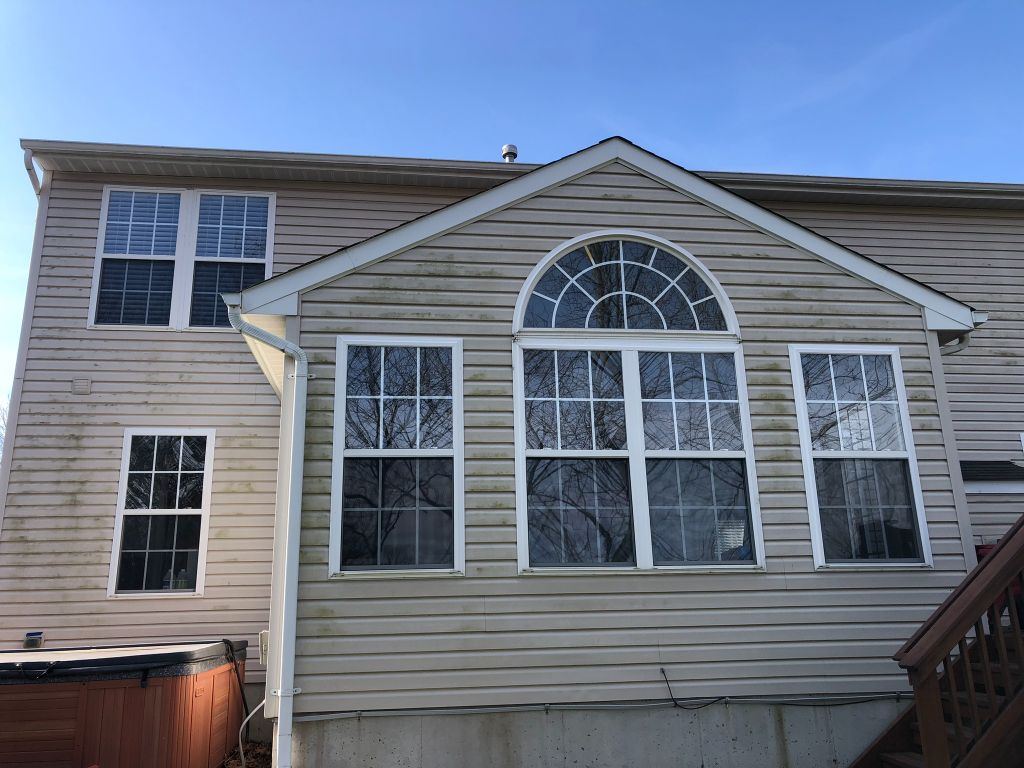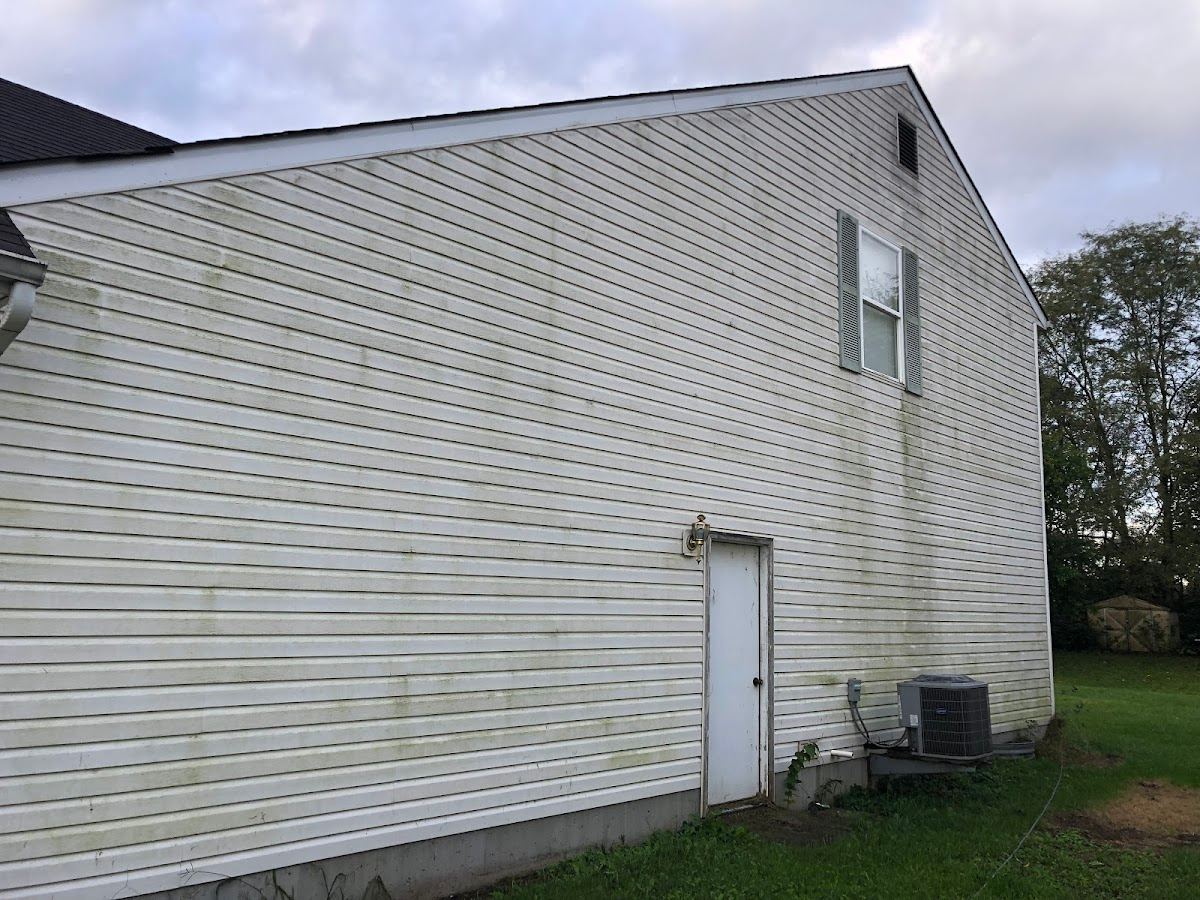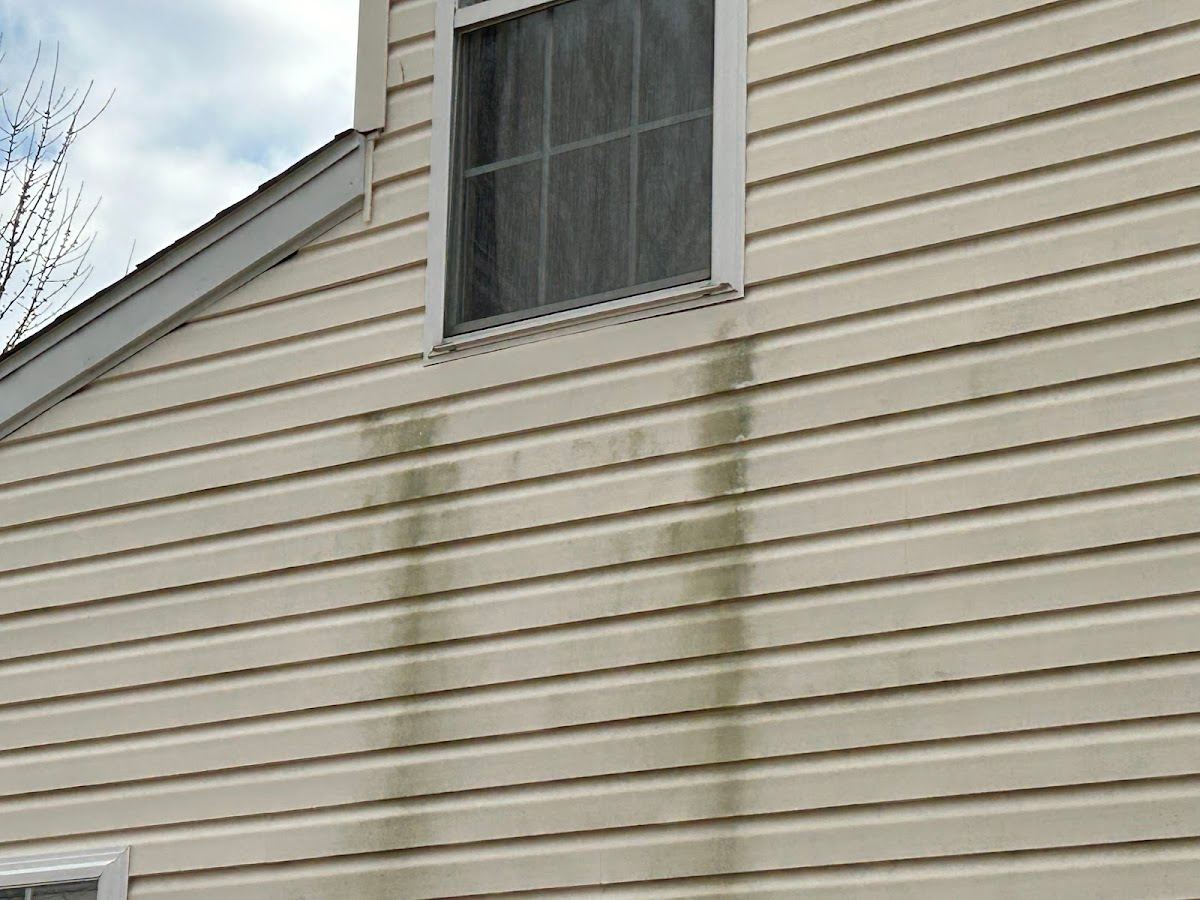
You walk out to grab the mail and notice it again: black streaks running down the north side of your roof, a green film creeping across the patio, siding that looks tired and gray instead of the color you actually paid for. Ohio weather does this. Our freeze-thaw winters, sticky summers, and damp shoulder seasons grow algae and mildew on nearly every outdoor surface a home has.
So you reach for the obvious answer: blast it with high pressure. But here's what a lot of homeowners learn the hard way. The wrong method can carve grooves into wood, force water behind siding, or strip the granules right off your shingles. Knowing the difference between pressure washing and soft washing saves you from cleaning a surface and damaging it in the same afternoon.
The Core Difference Comes Down to Pressure and Cleaning Solution
Pressure washing relies on force. A machine pushes water through a tight nozzle at high pressure, and that mechanical power scrubs grime off hard surfaces. It works because the water hits hard enough to dislodge dirt, mud, and stuck-on buildup.
Soft washing flips the approach. Instead of force, it relies on a surface-safe cleaning solution that does the work. The solution is applied at low pressure, given time to break down algae and mildew at the root, then rinsed away. The pressure at the surface is roughly what comes out of a garden hose.
One uses muscle. The other uses chemistry. Both have a place, and the trick is matching the method to the material in front of you. Pick wrong, and you either leave the job half-done or you cause damage that costs far more than the cleaning ever would.
When Pressure Washing Is the Right Call
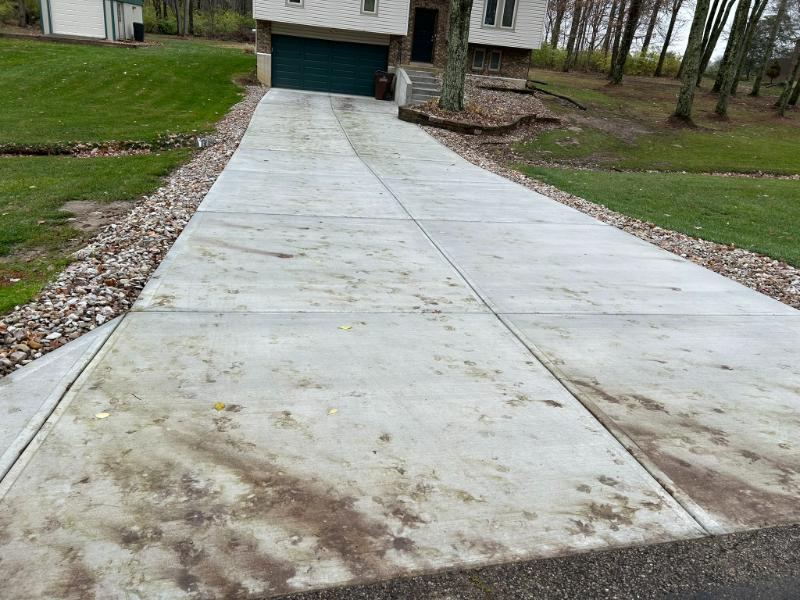
Pressure washing earns its keep on hard, durable surfaces that can take the force. In Ohio, those surfaces collect a specific kind of grime: road salt splashed up over winter, fine spring pollen baked into concrete, and the dirt that humid summers turn into a stubborn film.
It's the right tool for:
- Concrete driveways and garage aprons stained by oil, salt, and tire marks
- Sidewalks and pool decks with ground-in dirt
- Brick and stone patios where weeds and moss settle into the joints
- Unsealed retaining walls and paver surfaces
These materials are dense and tough. They don't absorb water the way wood or siding can, and they won't deform under proper pressure. A driveway that's gone gray over a couple of winters can come back to its original color in a single session. That said, even concrete has limits. Too much pressure held too close can etch the surface or leave wand marks that show up for years, so technique still matters.
When Soft Washing Is the Safer Choice
Most of the surfaces on the visible part of your home should never see high pressure. This is where soft washing matters, and where a lot of well-meaning homeowners with a rented machine get into trouble.
The black streaks on your roof aren't dirt. They're a hardy algae that feeds on the limestone filler in asphalt shingles. You can't blast it off without blasting off the protective granules too, and once those granules are gone, the shingle starts to fail. Roof washing done as a soft wash treats the algae at the root with a cleaning solution, then rinses it clean without touching the granules.
The same logic applies to your siding. Vinyl, aluminum, wood, stucco, and fiber cement all clean up beautifully with a soft-wash approach, and high pressure on any of them risks driving water behind the panels where it can sit and cause rot or mold. Our house washing and soft washing are built around that exact problem.
Reach for soft washing on:
- Roof shingles, and especially those Ohio black streaks
- Vinyl, aluminum, wood, and fiber cement siding
- Stucco and dryvit
- Wood fences, decks, and pergolas
- Screened porches, soffits, and gutters
Why Ohio's Climate Makes This Decision Matter More
If you lived somewhere dry, you could be a little careless about all this. Ohio doesn't give you that luxury.
Our humidity is the real culprit. Warm, damp summers along the I-75 corridor are exactly what algae, mildew, and moss want. They take hold on north-facing walls and shaded roofs that stay wet longest, then spread through fall as leaves pile up and trap moisture against your surfaces.
Then winter arrives and makes everything worse. Water works into tiny cracks, freezes, expands, and pries the crack wider. That freeze-thaw cycle repeats dozens of times a season. Any moisture that high pressure forces behind your siding or into a deck board has all winter to do damage. A surface that was merely dirty in October can be compromised by April.
That's the case for cleaning the right way the first time. Soft washing removes the algae and mildew that hold moisture against your home, which means surfaces dry faster and stay cleaner longer through the next wet season.
What the Wrong Method Actually Costs You
The damage from high pressure on the wrong surface isn't always obvious right away. That's what makes it dangerous. You finish the job, the surface looks clean, and the problem shows up months later.
On a roof, lost granules mean a shingle that ages faster and may need replacing years early. On wood, high pressure raises the grain and gouges soft spots, leaving a fuzzy, splintered surface that soaks up water instead of shedding it. On siding, the real risk is hidden: water forced behind a panel feeds mold inside your walls, and you won't see it until it's a much bigger problem.
There's also the issue of results that don't last. Blasting algae off a roof or fence without a cleaning solution only knocks back the visible growth. The roots stay. Within months it's back, often worse, because you've stripped away nothing that was actually feeding it. Soft washing solves the cause, not just the symptom, which is why the clean holds up.
How a Professional Decides Which Method to Use
A good cleaning isn't one method applied to the whole house. It's the right method for each surface, often on the same visit.
Before any water hits your home, the surface gets read first. We look at the material, its age and condition, how much algae or mildew has set in, and what's growing around it. A brick patio and the vinyl siding above it call for two completely different approaches, and treating them the same is how damage happens.
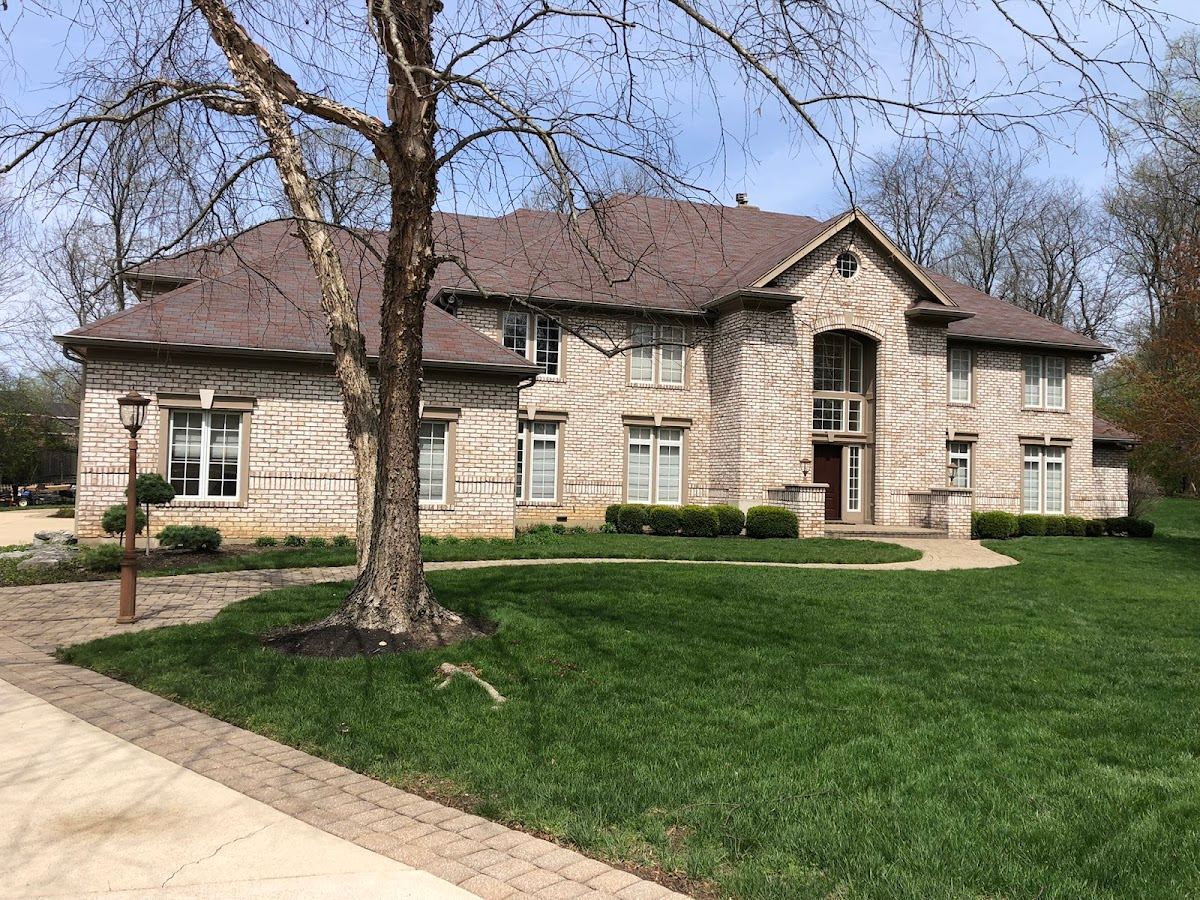
Plant life matters too. The cleaning solutions used in soft washing are effective, so we rinse and protect landscaping and account for runoff. Homeowners across Springboro and Centerville have flower beds and mature plantings right up against the house, and protecting them is part of doing the job correctly. Being licensed and insured is the baseline here. The judgment about which method goes where is what actually protects your property.
A Simple Way to Decide for Yourself
When you're standing in front of a dirty surface and wondering which way to go, one question sorts most of it out: is this surface hard and flat, or is it part of the home you live inside?
- Hard, ground-level, built to take force (concrete, brick, stone) usually means pressure washing.
- Part of the structure or anything that absorbs water (roof, siding, wood, stucco) almost always means soft washing.
When the answer isn't obvious, default to the surface-safe option. You can always clean more aggressively later, but you can't un-strip a shingle or un-rot a deck board. The understanding of pressure washing vs soft washing in Ohio that protects your home most is simply this: start gentle, and only use force where the surface can clearly take it.
Get a Straight Answer for Your Home
Every home is a little different, and the honest way to know what your roof, siding, and concrete need is to have someone look at them. At Redhead Pressure Cleaning, we treat your home as our own, match the method to each surface, and tell you plainly what will and won't help. We work the I-75 corridor from Dayton to Cincinnati and serve homeowners across Ohio.
If those black roof streaks, gray siding, or a tired driveway have been bothering you, reach out for a free estimate. Call or text us at (351) 242-0666 and we'll walk you through the right approach for your home, no pressure, just an honest answer.