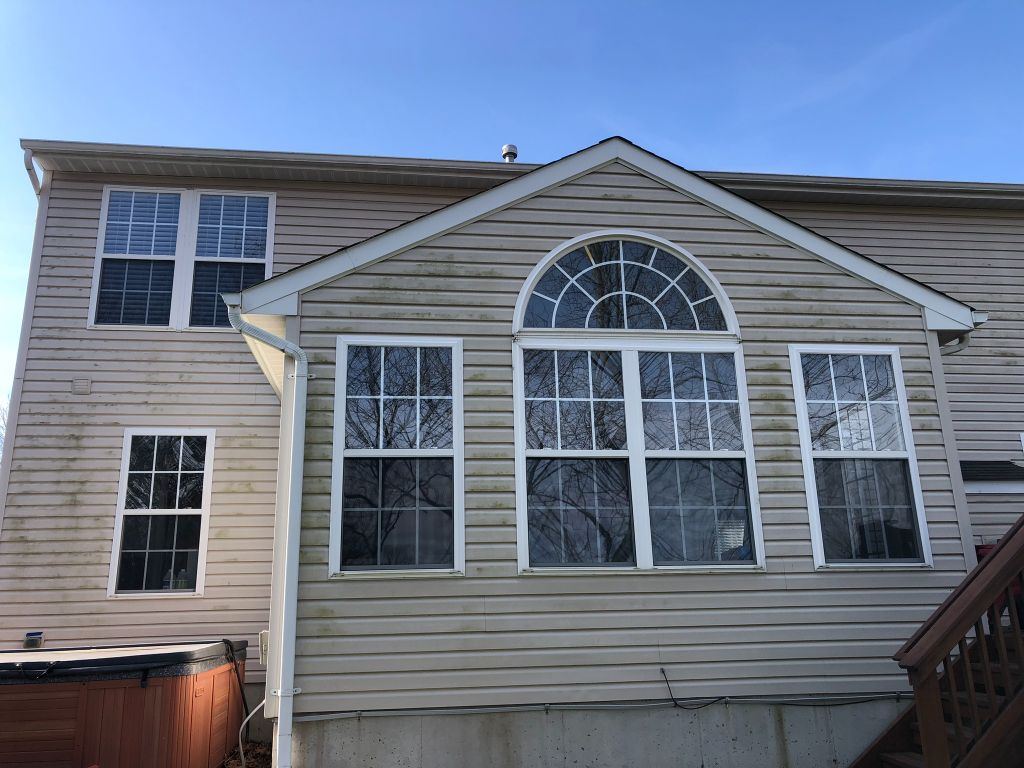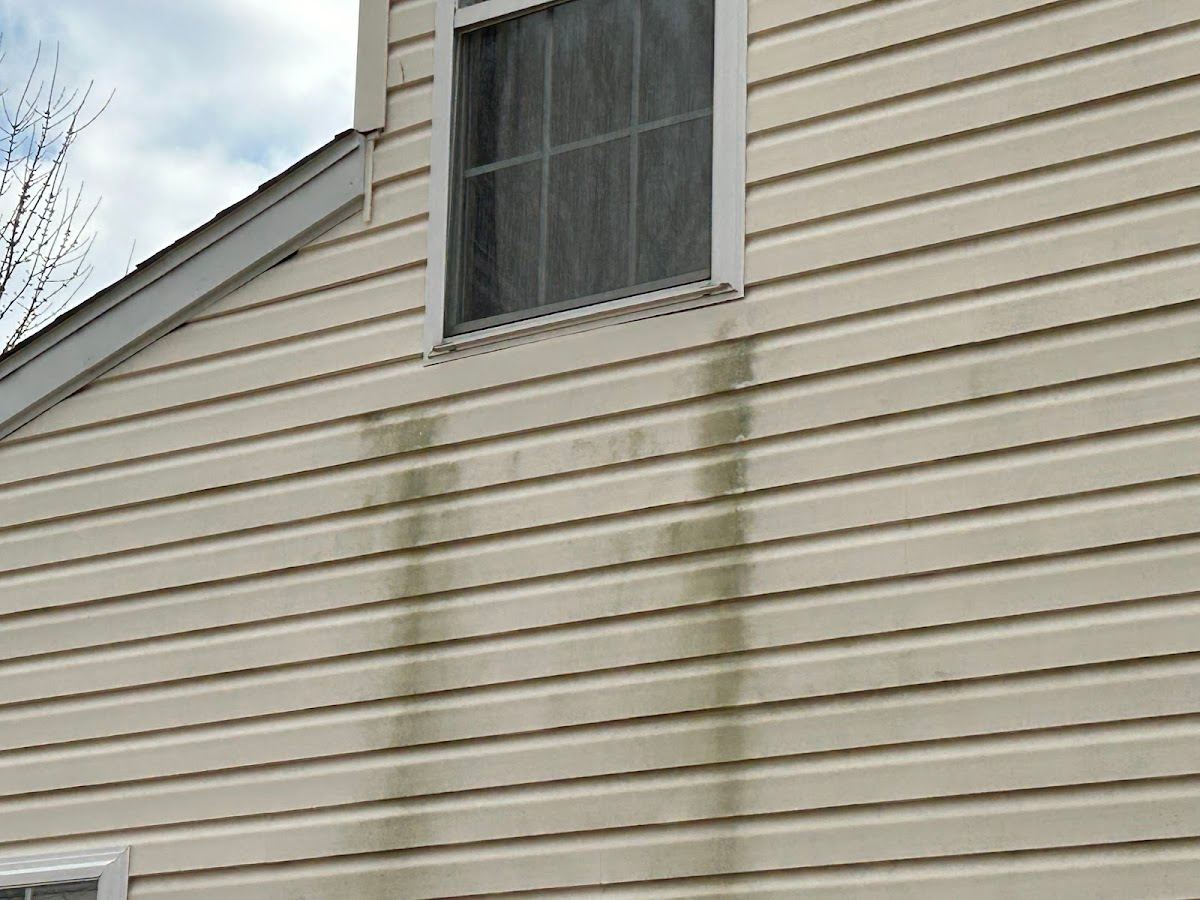
Your vinyl siding is streaked with green. Maybe it's the north wall that never sees sun, or the spots under the gutters where everything drips. You've seen the mess, and now you're wondering if you can blast it clean in an afternoon. Here's the worry that keeps people from pulling the trigger: do it wrong and you don't just fail to clean the siding, you damage it.
That worry is fair. A pressure washer pointed at vinyl can crack panels, drive water behind the siding, and leave you worse off than when you started. But cleaning vinyl siding the right way is safe, effective, and one of the best things you can do for your home in southwest Ohio. The difference is in the method, not the machine.
The Short Answer: Yes, When It's Done Right
Pressure washing vinyl siding is safe when it's done with the right pressure, the right distance, and the right cleaning solution. The trouble is that "pressure washing" has become a catch-all term. Most people picture a 3,000 PSI machine firing a tight stream straight at the wall. That image is exactly what gives vinyl a bad name.
Vinyl is durable, but it isn't armor. Hit it with too much pressure and you can dent or crack a panel, especially older siding that's gone brittle after years of Ohio sun and cold. A narrow, high-pressure stream can also force water up under the panels, where it has no easy way out. That trapped moisture is how you end up with mold growing behind the siding instead of on it.
So the honest answer is this: high-pressure blasting is risky on vinyl. A controlled, surface-safe approach is not. Knowing which one you're getting is the whole game.
Why Soft Washing Beats Blasting on Vinyl
The method that actually protects your siding is called soft washing. Instead of relying on raw water pressure to scrub the wall, soft washing uses a low-pressure rinse paired with a cleaning solution that does the real work. The solution breaks down the algae, mildew, and grime at the root. Then a gentle rinse carries it all away.
This matters because the green and black stains on vinyl aren't just dirt. They're living organisms: algae, mildew, and a stubborn bacteria called gloeocapsa magma that loves our humid Ohio summers. You can't power-wash a living stain into submission. Blast it off the surface and it grows right back, often within weeks, because the spores are still embedded in the texture of the panel.
A proper soft washing treatment kills the organism so the siding stays clean for far longer. You get a better result with a fraction of the pressure, and your siding never takes a beating. That's why it's the standard we use for vinyl siding cleaning on nearly every home.
What Ohio Weather Does to Your Siding
Southwest Ohio is hard on vinyl, and it's hard in a very specific way. Our climate hits siding from every direction across the calendar.
- Spring coats everything in a yellow-green film of tree pollen that sticks to the texture of the panels.
- Summer brings the heat and humidity that algae and mildew thrive in, especially on shaded north and east walls.
- Fall drops wet leaves into corners and against foundations, holding moisture against the siding for weeks.
- Winter means freeze-thaw cycles and road salt. Salt spray from the street settles on lower panels and gets driven into any crack or seam.
That freeze-thaw cycle is the quiet villain. Water that gets behind your siding from a careless pressure washing freezes, expands, and works panels loose over the winter. By spring you've got warping and gaps you didn't have in the fall. Cleaning vinyl siding the right way keeps water on the outside of the wall, where it belongs.
The Damage a Wand Can Do in Seconds
I've walked plenty of homes after a do-it-yourself job or a rushed crew, and the damage follows a pattern. It's worth knowing what to watch for, because most of it is avoidable.
- Cracked and chipped panels from too much pressure at too close a range, usually on brittle older siding.
- Water behind the siding from spraying upward into the seams instead of straight on or slightly down.
- Oxidation streaks where high pressure strips the chalky outer layer unevenly, leaving the wall blotchy.
- Ruined caulk and trim around windows and doors where a tight stream tears out the sealant.
- Water inside the house when spray gets forced past window frames, light fixtures, or dryer vents.
None of this is the machine's fault. It's a matter of pressure, angle, and distance. A trained hand keeps the water moving in the right direction, never drives it up under a panel, and reads the age and condition of the siding before the first drop hits the wall.
Can You Do It Yourself? An Honest Take
You can clean your own siding, and for a small one-story section a homeowner with a garden hose and a soft-bristle brush can manage light grime. I won't pretend otherwise. If you go that route, work from a ladder you trust, spray straight on or slightly downward, and never aim up into the seams.
Where it goes sideways is with a rented pressure washer. Those machines put out more pressure than most people expect, and on a tall wall you're balancing on a ladder while wrestling a wand that wants to push you off it. That's how panels crack and how people get hurt. The algae also comes back fast when you only rinse the surface without a cleaning solution to kill it.
If your home is two stories, if the staining is heavy, or if you simply don't want to spend a Saturday on a ladder, that's where a professional house washing makes sense. We carry the reach, the right solution, and the insurance to do it safely. We're licensed and insured, and we treat your home as our own.
How a Professional Soft Wash Actually Works
People are often surprised at how calm a proper job looks. There's no roaring blast, no water flying everywhere. Here's the rhythm of it.
First we walk the house and look at the siding's age and condition, note where the algae is worst, and cover or move anything that needs protecting. We wet down the plants and shrubs along the foundation so the cleaning solution rinses clear of them. Then we apply a surface-safe solution that clings to the wall and goes to work on the organic growth. We let it dwell while it kills the algae and mildew at the root. Finally we rinse from the top down with low pressure, and the stains run off with the water.
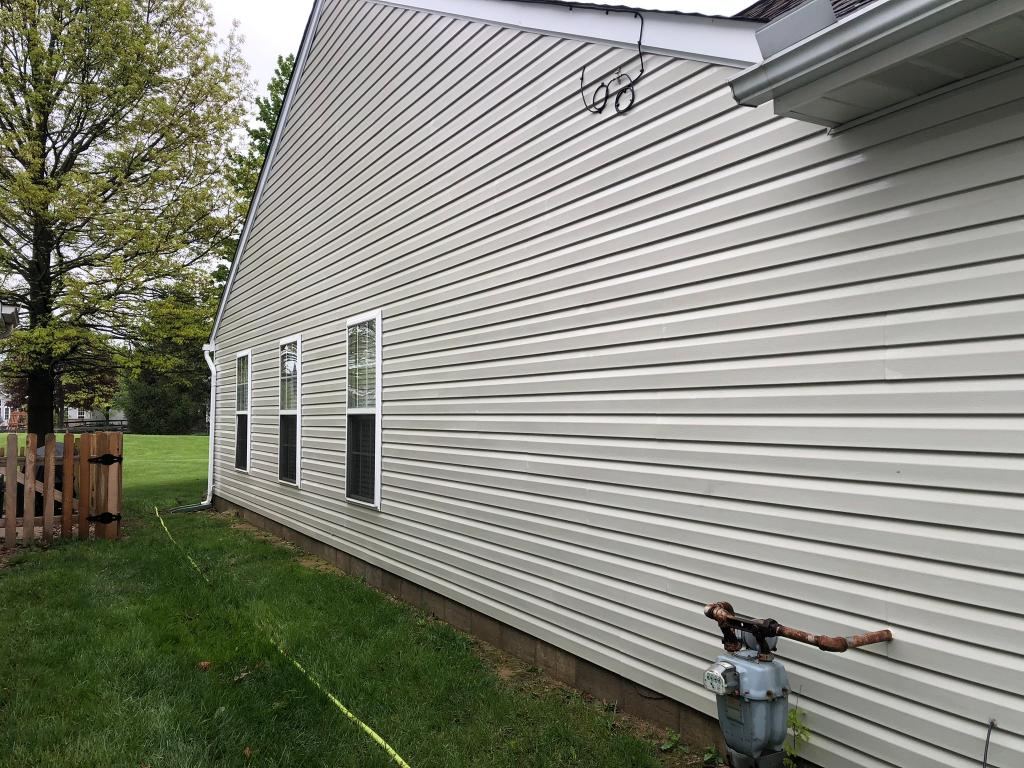
The result is siding that's genuinely clean, not just rinsed, and that stays that way through the season. Whether you're in Springboro, Kettering, or anywhere along the I-75 corridor between Dayton and Cincinnati, the approach is the same: protect the home first, then clean it.
How Often Should Ohio Homes Get Washed?
For most homes here, once a year keeps the siding ahead of the algae. Spring is the popular choice because it clears off the winter salt and the fresh pollen in one pass and sets the house up for summer.
Some homes need it more than others. If your siding faces north or sits under heavy tree cover, it stays damp longer and grows algae faster, so an annual wash is closer to a must. Homes in full sun with good airflow can sometimes stretch a little longer. The tell is simple: when you start to see that green or gray haze creeping across a wall, it's time. Catching it early means a lighter job and siding that lasts longer.
Regular cleaning isn't just about looks. Algae and mildew hold moisture against the panels, and over years that shortens the life of the siding. A yearly wash protects the investment, not just the curb appeal.
Ready for Siding That Looks New Again?
So, is pressure washing safe for vinyl siding? Done with high pressure and no plan, it's a gamble. Done as a surface-safe soft wash by someone who knows Ohio homes and Ohio weather, it's one of the safest, most worthwhile things you can do for your house. The siding comes clean, the algae stays gone longer, and not a drop ends up where it shouldn't.
If your vinyl is looking tired, streaked, or green, we'd be glad to take a look. Redhead Pressure Cleaning serves the I-75 corridor from Dayton to Cincinnati and across Ohio, and the estimate is always free. Call or text us at (351) 242-0666 and we'll get your home looking like itself again.