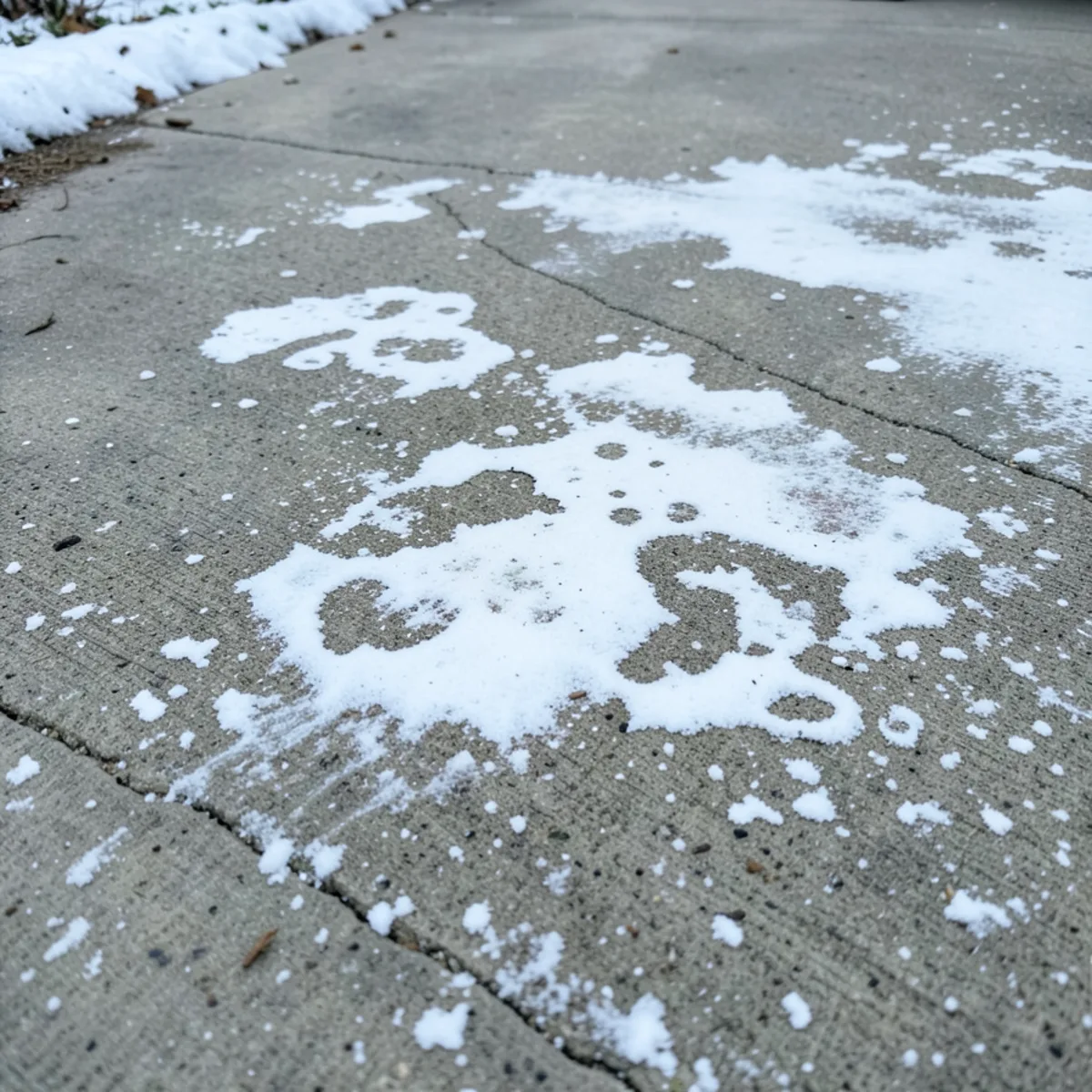
Every Ohio winter leaves the same white crust on driveways, garage aprons, and sidewalks. It looks like a cosmetic nuisance you can rinse off in spring. It's actually the visible edge of a process that's quietly breaking your concrete apart.
Here's what road salt and Ohio's freeze-thaw winters are really doing to your concrete — and the simple steps that protect it.
How Salt Damages Concrete
Salt doesn't dissolve concrete directly. It does something sneakier: it pulls extra moisture into the surface and lowers the temperature at which that water freezes. So salted concrete holds more water and goes through more freeze-thaw cycles than it otherwise would.
Each time that trapped water freezes, it expands and pushes the concrete apart from the inside. Over a few Ohio winters, that shows up as scaling and spalling — the top layer flaking, pitting, and crumbling away.
The Freeze-Thaw Multiplier
Southwest Ohio is tough on concrete because it swings across the freezing line constantly — melt by afternoon, refreeze overnight, over and over. That's the single most destructive pattern for concrete, and salt makes every cycle count double. Add the salt that tracks up from the road onto your driveway and garage apron, and the surface takes a beating from November through March.
What You Can Do About It
- Rinse off salt buildup. Clearing the salt crust reduces how much moisture it pulls in and how many freeze-thaw cycles the surface sees.
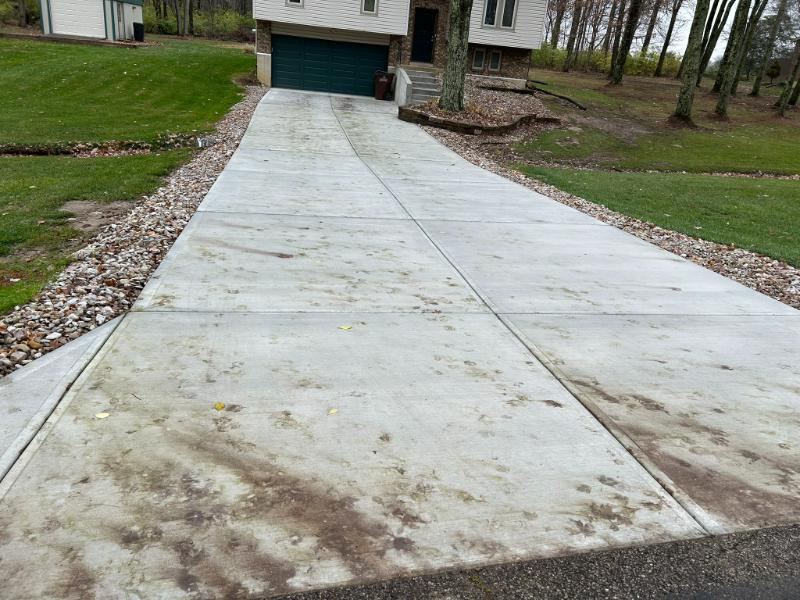
- Keep the concrete clean. Grime and organic growth hold moisture against the surface too.
- Seal it. A quality concrete sealer is the real defense — it blocks salt and water from soaking into the pores in the first place.
- Use salt sparingly. Sand or a concrete-safe de-icer is gentler than rock salt.
Timing It Right in Ohio
The ideal rhythm is simple: in late spring, once the salt season is over, have the concrete cleaned to strip off the winter's salt and grime, let it dry, and then seal it before the next winter arrives. Sealing a clean, dry surface is what makes it last; sealing over trapped salt just locks the problem in.
Newer concrete especially benefits from being sealed early, before the first few winters start the damage.
Get Ahead of Next Winter
If last winter left your driveway looking chalky, flaky, or pitted, now's the time to plan a spring clean-and-seal. We'll clear the salt and buildup with a proper concrete cleaning and prep the surface so a sealer can actually protect it.
Get a free estimate or text (351) 242-0666 to protect your concrete before the next freeze-thaw season.