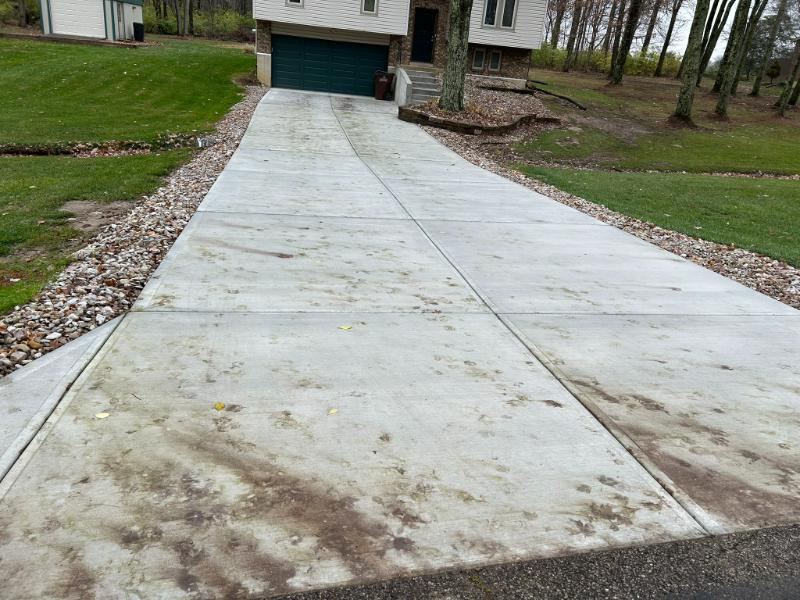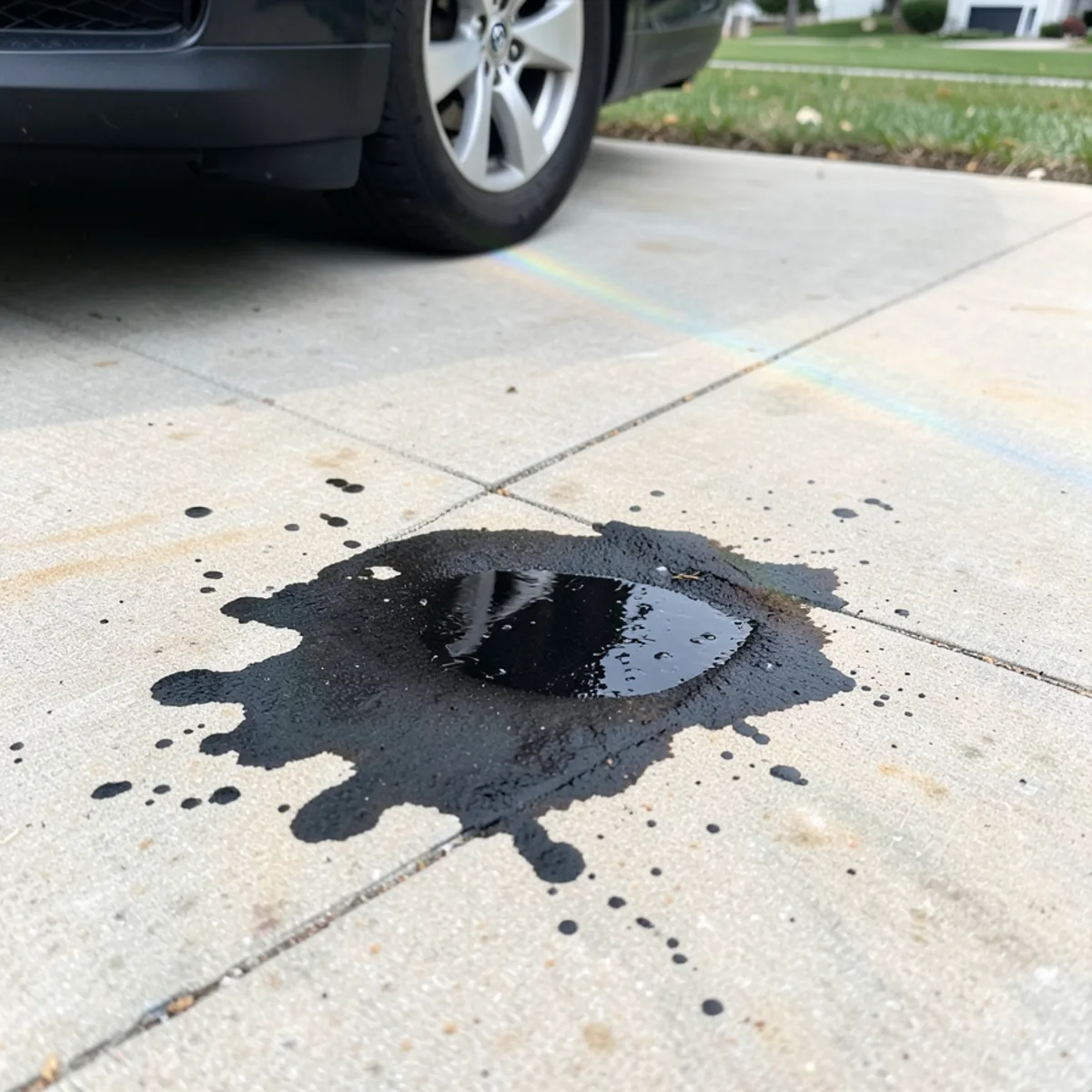
The car sat in the same spot all winter, and now there's a dark shadow on the concrete to prove it. You hose it down, hit it with some dish soap, maybe borrow a pressure washer — and the stain barely fades.
Oil is stubborn for the same reason rust is: it doesn't sit on concrete, it sinks into it. Getting it out means pulling it back up, not blasting it off. Here's how.
Why Oil Sinks Into Concrete
Concrete looks solid, but it's full of tiny pores. Motor oil, transmission fluid, and grease seep down into those pores and sit below the surface. A pressure washer cleans the top layer, so the stain looks lighter for a day — then the oil wicks back up and it returns.
The fix is a degreaser that breaks the oil loose plus heat and agitation to lift it out, which is what professional oil stain removal is built around.
Fresh Spills: Act Fast
A spill you catch early is the easy case. Cover it immediately with an absorbent — cat litter, cornstarch, or baking soda — press it in, and leave it for several hours to soak up what hasn't penetrated yet. Sweep it up and repeat if needed. The faster you do this, the less oil reaches the pores.
The DIY Method for Set-In Stains
For a stain that's already soaked in:
- Wet the area, then apply a concrete degreaser or a grease-cutting dish soap.
- Scrub it in with a stiff nylon brush and let it dwell per the product's directions.
- Rinse thoroughly, then repeat — old stains usually take two or three rounds.
- A paste of baking soda or powdered laundry detergent left overnight can help draw out a deep stain.
This works on moderate stains if you're patient. What it won't fully fix is a years-old, deeply saturated stain — that's where hot-water extraction makes the difference.
Why the Pro Result Looks Different
A proper job uses a dedicated degreaser worked into the concrete, then hot water and a surface cleaner that lifts the loosened oil out evenly. The result is a clean section that matches the rest of the driveway instead of a faded patch surrounded by grime. We also clean the whole slab so there's no ghost outline where the stain used to be.
Keeping It Clean
Once the oil is out, sealing the concrete fills the pores so the next drip sits on top where you can wipe it away. Park a drip tray under a leaky vehicle until it's fixed. And if a new stain appears, treat it before winter — the longer oil sits, the deeper it goes.
Dealing with a stain that won't budge? Get a free estimate or text (351) 242-0666.