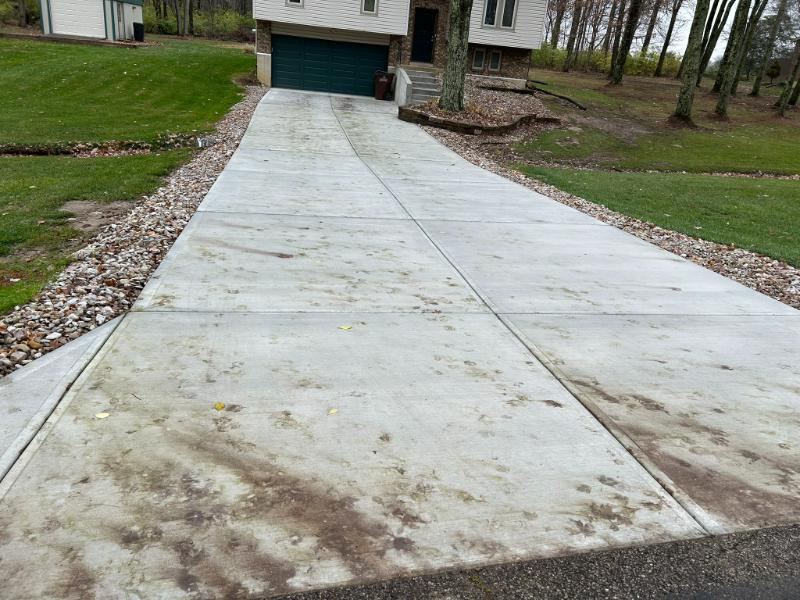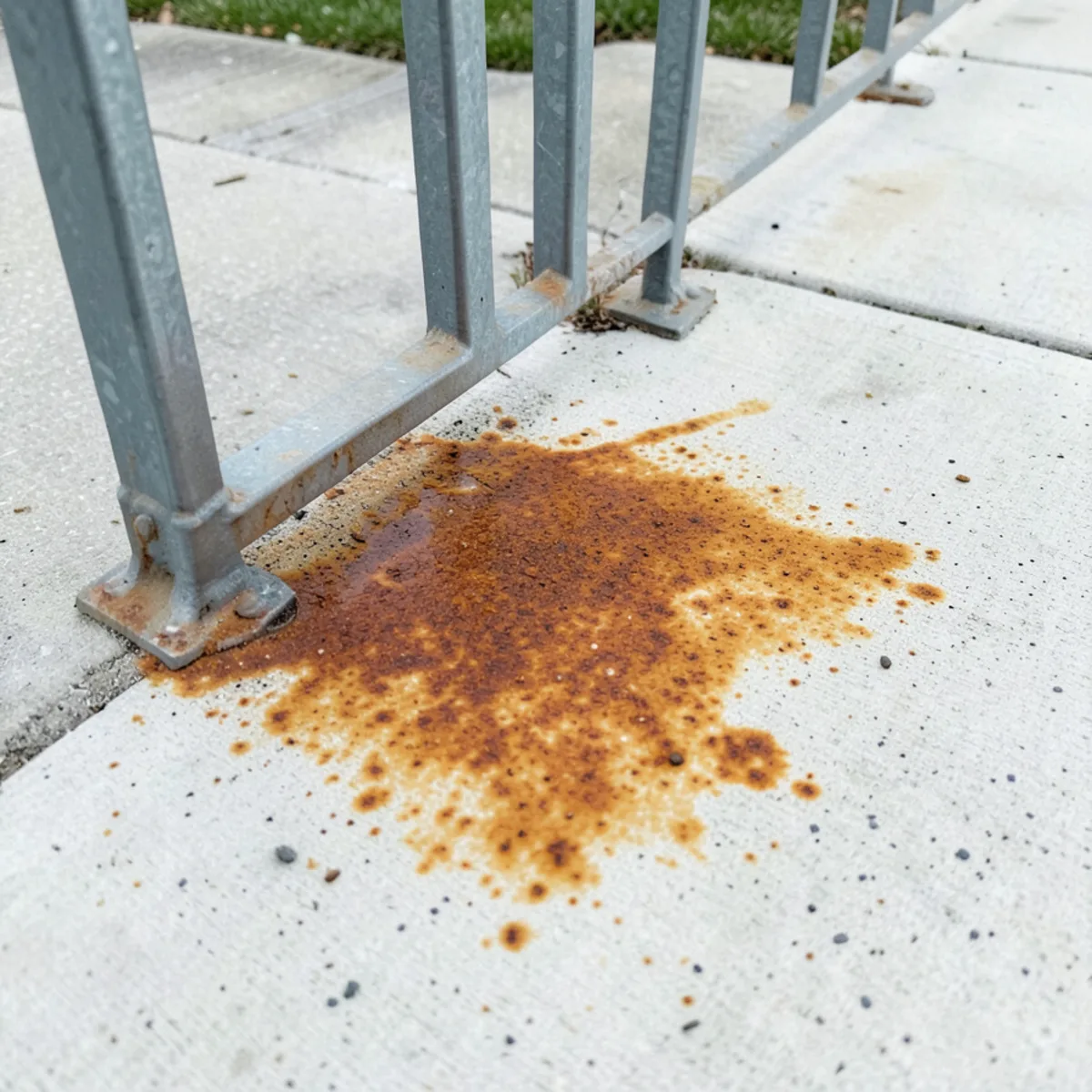
You finally rent a pressure washer, aim it at the orange stain spreading across your driveway, and pull the trigger. The surrounding concrete gets brighter. The rust stain? Still there — maybe even sharper against the clean concrete around it.
That's the frustrating truth about rust: it's the one stain a pressure washer can't fix, because the problem isn't on top of the concrete. It's inside it. Here's what's really happening and how to actually get it out.
Why Rust Won't Pressure Wash Off
Most stains sit on the surface — algae, dirt, pollen — and water pressure lifts them away. Rust is different. It's iron oxide that has chemically bonded into the pores of the concrete. Water, even at 3,000 PSI, can't reach it, and scrubbing just polishes the surface while the stain stays put.
Removing rust takes a rust-specific treatment that dissolves the iron oxide and lets it rinse free — the heart of professional rust stain removal. Using the wrong acid or too strong a mix can etch and lighten the concrete, which is why this one is easy to make worse.
What Causes Rust Stains on Ohio Driveways
Before you treat a stain, it helps to know where it came from, because the source often determines whether it'll come back:
- Fertilizer. Many lawn fertilizers contain iron. Overspray onto the driveway, then a rain, and you get orange specks or streaks.
- Metal furniture and planters. Iron chair legs, wrought-iron tables, and metal pots leave rust rings where they sit.
- Well water and irrigation. High-iron water from a sprinkler or hose leaves a rust film wherever it dries.
- Rebar and wire. Metal reinforcement near the surface can rust and bleed up through the slab — often a thin crack with a rust line.
The DIY Approach (and Its Limits)
For a small, fresh rust spot, a homeowner can sometimes make progress with a product made specifically for rust on concrete, following the label exactly and testing a hidden area first. Household vinegar or lemon juice occasionally helps on very light marks.
What to avoid: muriatic acid and harsh toilet-bowl cleaners. They can strip the surface, leave a lighter etched patch, and burn plants and skin. If the stain is large, old, or from rebar, DIY usually ends in a blotchy result — that's the point to bring in a pro.
Stopping It From Coming Back
Removing the stain is only half the job if the source is still there. Switch to iron-free fertilizer or sweep overspray off the concrete before it rains. Put pads under metal furniture. If you're on well water, aim sprinklers away from concrete. Once the concrete is clean, sealing it adds a barrier that makes future stains far easier to remove.
When to Call Redhead
If the rust is spreading, coming up through the slab, or you've already tried a product and made it blotchy, let us handle it. We match the treatment to the stain, protect your landscaping, and clean the surrounding driveway so the whole surface looks even — not just patched.
Send us a photo or text (351) 242-0666 for a free estimate.